


Native Landscape Design + Installation
Ecologically informed native planting for residential and institutional landscapes.
Hepatica serves projects in Montgomery County, Bucks County, Philadelphia and nearby southeastern Pennsylvania communities

What We Do
Hepatica Landscapes designs and installs native plant landscapes rooted in the ecology of southeastern Pennsylvania.
Rather than treating a landscape as a collection of individual ornamental plants, we look first at the conditions already present on the site: light, soil, moisture, existing vegetation, surrounding plant communities and how the property is used. From there, we develop plantings that are visually intentional while functioning more like living plant communities.
Projects may include complete landscape transformations, new native garden installations, renovations of existing beds, lawn reduction, woodland-edge plantings and the integration of native trees, shrubs, grasses, sedges and flowering perennials.
Our involvement can include site assessment, planting design, species selection, plant sourcing, layout, installation and long-term management.
Who This Is For
This service is a good fit for homeowners, institutions and organizations that want a landscape that is both attractive and ecologically meaningful.
We often work with properties where the goal is to:
-
Replace conventional or underperforming landscaping with native plants.
-
Reduce lawn while maintaining a designed, intentional appearance.
-
Create habitat without making the property feel unmanaged.
-
Establish plantings suited to the property's actual soil, light and moisture conditions.
-
Incorporate a greater diversity of native plants than is typically available through conventional landscape design.
-
Create a landscape that can evolve over time rather than needing to be repeatedly replaced.
You do not need to know which plants you want before contacting us. Understanding the site and determining the right plant community is part of our process.


How the Process Works
1. Tell Us About the Property
Start by sending us your location, photographs, approximate project area and what you would like to change.
2. Site Consultation
We visit the property to evaluate existing vegetation, growing conditions, drainage, sun exposure, invasive plants, surrounding landscape and how you use the space.
3. Design + Planting Strategy
We develop the planting approach, species palette, spatial organization and project scope. Depending on the project, this may range from a straightforward planting plan to a more detailed ecological landscape design.
4. Site Preparation + Installation
We prepare the planting areas, lay out the design on site and install the selected plant material.
5. Establishment + Stewardship
Native landscapes change rapidly during their first several growing seasons. We can remain involved after installation to guide establishment, manage unwanted vegetation and make adjustments as the planting develops.
Project / Photos
Native Landscape Transformation — [Chester County, PA]
A conventional residential landscape was redesigned around native trees, shrubs, grasses, sedges and flowering perennials selected for the property's existing growing conditions.
The goal was not simply to substitute native plants for ornamental species, but to create a layered planting that would remain visually intentional while providing greater seasonal interest, habitat value and ecological function.

This home was newly built and was looking to design and install their landscape with all native species.

After developing the design and plant palette we began the installation. Here we are laying beds and placing our plants.

Once settled in, the planting comes to life revealing a wide array of species thriving, all fine tuned for soil, sun/shade and moisture requirements.
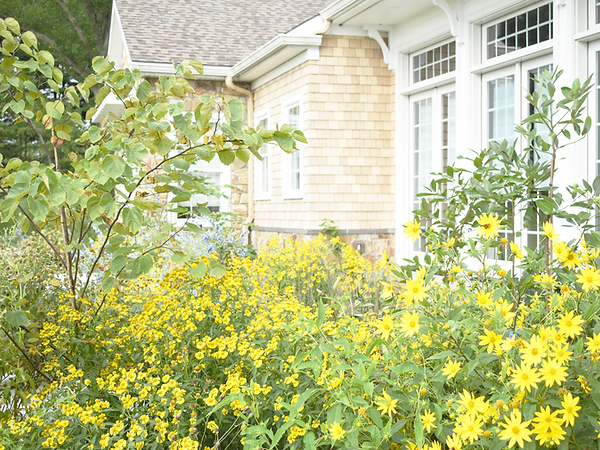
Pictured above was this plantings first fall season, phasing the planting into a sea of yellow with native sunflowers like Helianthus decapetalus, Heliopsis helianthoides and Helenium autumnale putting on a show.

From early spring to late fall there will always be a diverse community of plants that will directly support the sites local ecology.
